Programming News and Views
Send your programming press releases, news items or comments to: NewsDesk@i-programmer.info
ENIAC Replica Built In Cardboard By Teenagers 25 Jan | Sue Gee 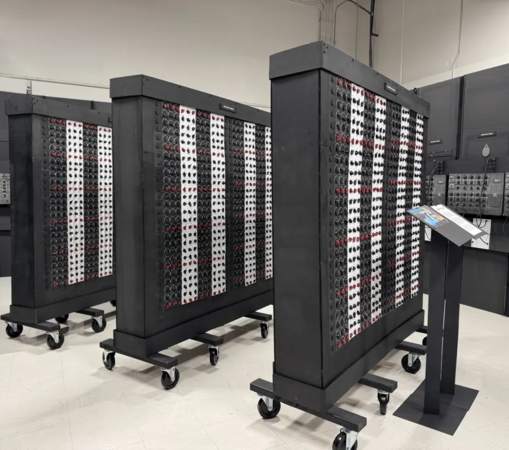 A full-scale replica of ENIAC, the world's first general-purpose computer, has been built to mark its 80th anniversary next month. Although not functional, the 500 square foot model visually simulates the original and is impressive in its sheer size and attention to detail. |
January Week 3 24 Jan | Editor  This week saw the release of jQuery 4, almost 20 years to the day (January 14, 2006) since John Resig debuted the JavaScript library he had created single-handedly and almost 10 years since the previosly major release. jQuery, still JavaScript's standard library, is now brought up-to-date and ready for a fresh start, thanks to the efforts of a large team, to whom we send mant congratulations. |
Agentic AI Foundation Announced 23 Jan | Editor  Recognizing the importance of AI Agents, industry stakeholders have decided to establish a Foundation that fosters common open standards and collaboration . |
Amazon Launches $68M AI PhD Program 23 Jan | Kay Ewbank  Amazon has announced a new AI PhD Fellowship program for PhD students in the area of AI research trhat will support PhD students at nine universities in the USA. |
Fjall 3 Improves Performance and Memory Use 22 Jan | Kay Ewbank  Fjall, the Rust-based key-value store, has a new release. Version 3 features better performance for large data sets, improved memory usage, more extensive configuration, and a new disk format made for longevity and forwards compatibility, along with fully revamped APIs. |
Copilot Studio Extension For Visual Studio Code Now Available 22 Jan | Kay Ewbank  Microsoft has released the Copilot Studio extension for Visual Studio Code on the Visual Studio Marketplace. Copilot Studio is a graphical, low-code tool for building agents and agent flows. |
jQuery 4 Released 21 Jan | Ian Elliot  jQuery 4 has been released just after the 20th Anniversary of John Resig unveiling the JavaScript library he had created. Irrelevant? A dinosaur in an age of refinement? Neither of the above. It is still JavaScript's standard library and has been brought up-to-date and made entirely relevant with this long-anticipated new major version. |
Google Releases FunctionGemma Model 21 Jan | Nikos Vaggalis  FunctionGemma is an open-source Google model fine-tuned for function calling that aims to revolutionize the way we interact with our devices. |
Get To Grips With Transformers And LLMs 20 Jan | Nikos Vaggalis  This isn't just a course, it's the complete curriculum of Stanford’s CME295 Transformers and Large Language Models from Autumn 2025. |
Coursera For Positive Professional and Personal Outcomes 20 Jan | Sue Gee 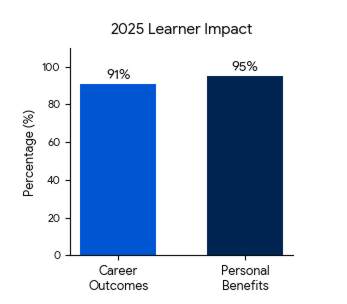 For a few more days at the beginning of 2026, Coursera has a special offer - 50% off a Coursera Plus annual subscription. Very worthwhile if you love learning new skills or keeping your existing skills up to date. But don't take my word for it. Results of the 2025 Coursera Learner Outcomes Report, show 91% achieved positive career outcomes |
pg-aiguide - Agentic Coding For PostgreSql 19 Jan | Nikos Vaggalis  pg-aiguide adds AI-optimized PostgreSQL expertise to coding assistants. What does that mean? |
Ncurses 6.6 Improves Windows Terminal Support 19 Jan | Kay Ewbank  Ncurses 6.6 has been released with improved support for Windows Terminal, along with other enhancements including a better terminal mouse driver and improved error handling. |
Atlas Production Ready This Year 18 Jan | Lucy Black  The latest incarnation of Boston Dynamics' Atlas Robot took to the stage at CES 2026. Hyundai announced that it plans to deploy tens of thousands of the humanoid robot in its own manufacturing facilities and a strategic partnership between Hyundai and Google DeepMind means these robots will possess "physical intelligence". |
January Week 2 17 Jan | Editor If you want to get up to speed on stuff that affects you as a developer, our weekly digest summarizes the news written each day by programmers, for programmers. In this week's featured articles, Ian Elliot looks at how to use typed arrays to access graphical data in JavaScript and Mike James explains exactly how to master the Windows console in C#. |
Nordic API Platform Summit 2025 17 Jan | Nikos Vaggalis  An event for API practitioners from around the world covering everything API-related. We're checking the highlights. |
On This Day In 1956 - SAGE Announced 16 Jan | Sue Gee  On this day 70 years ago, the US government disclosed its plans for SAGE (Semi-Automatic Ground Environment), the most ambitious computing project of the Cold War. In response to the prospect of a Soviet bomber attack, this massive network of radar and "super-computers" pioneered real-time processing and the interactive display technologies that defined early computing. |
Google Launches Open Source Standard For Agentic Commerce 15 Jan | Kay Ewbank  Google has released an open standard that can be used to turn AI interactions into sales. The Universal Commerce Protocol (UCP) establishes a common language and functional primitives to enable systems to pass data between "consumer surfaces, businesses, and payment providers". |
Android AOSP Goes Biannual 15 Jan | Alex Denham  Google has changed the schedule for its Android Open Source Project (AOSP) from quarterly to half yearly. Until now, the releases have followed those of Google's closed Android operating system. Security updates will continue to be made more frequently. |
Other Recent News
|

I Programmer Library
Featured Articles
Impossible Equalities - A JavaScript Puzzle 23 Jan | Ian Elliot  It is almost folklore that the JavaScript equality operator == is evil and you should always use the strict equality operator === but sometimes it just makes things easier to get JavaScript to do all of the conversions for you. In this puzzle the temptation leads to a real problem. |
Deep C Dives: All You Need Are Bits 21 Jan | Mike James  If there is a single characteristic that sets C programmers apart, it is an understanding of bits. If you don’t understand bits then you are a programmer in some other language pretending to be a C programmer. Harsh, but true. Find out why the bit has an important role to play in this extract from my book, Deep C Dives. |
SAGE - Computer of the Cold War 16 Jan | Sue Gee  War is a spur to innovation and computing was kickstarted in the Second World War, but perhaps its greatest driver was the Cold War with its need to monitor the skies for a potential nuclear strike. For this, the US Government commissioned SAGE (Semi-Automatic Ground Environment), the most ambitious computing project of the era. |
JavaScript Canvas - WebGL A 3D Cube 14 Jan | Ian Elliot  It's a right of passage - you have to draw a 3D cube to prove you can! It also needs a deep understanding of WebGL. This extract from Ian Elliot's book on JavaScript Graphics looks at how to use typed arrays to access graphic data. |
Deep C# - The Console 12 Jan | Mike James  Have you ever wanted to open a Windows console in the middle of an application that doesn't usually support one? This article explains exactly how to master the console. |
Unhandled Exception!
|
Book Watch
Follow Book Watch on Twitter
Book Watch is I Programmer's listing of new books and is compiled using publishers' publicity material. It is not to be read as a review where we provide an independent assessment. Some but by no means all of the books in Book Watch are eventually reviewed.
If Anyone Builds It, Everyone Dies (Little, Brown) 23 Jan In this book, subtitled "Why Superhuman AI Would Kill Us All", Eliezer Yudkowsky and Nate Soares argue that sufficiently smart AIs will develop goals of their own that put them in conflict with us—and that if it comes to conflict, an artificial superintelligence would crush us. The contest wouldn't even be close. Yudkowsky and Soares walk through the theory and the evidence, present one possible extinction scenario, and explain what it would take for humanity to survive. <ASIN:0316595640 > |
Software Architecture with C++, 2nd Ed (Packt) 21 Jan This guide equips the reader with the skills to design and build robust, distributed systems using modern C++. Starting with fundamental architectural principles and design philosophies, Andrey Gavrilin, Adrian Ostrowski and Piotr Gaczkowski walk readers through practical approaches to designing and deploying reliable systems. This edition contains significant updates across the book, including new chapters on observability, package management, and C++ modules to address real-world software challenges. <ASIN:1803243015 > |
Spring AI in Action (Manning) 19 Jan In this book Craig Walls sets out the case that when it comes to AI applications, no Python, no problem! The Spring AI framework makes it possible to add LLM-based features to any Spring application using Java or other JVM languages like Kotlin. From setting up Retrieval Augmented Generation (RAG) to creating AI agents, Craig Walls shows the reader how to build AI applications natively using Spring AI and Spring Boot. Starting with a simple “Hello AI World” example and quickly advancing to more sophisticated techniques, including RAG, AI agents, tool use, speech, and AI observability. <ASIN:163343611X > |
More Book Watch
|
Previous Book Watch.
Follow Book Watch on Twitter.
Publishers send your book news to:
bookwatch@i-programmer.info