| Nintendo - The Early History |
| Written by Historian | ||||||
Page 2 of 2
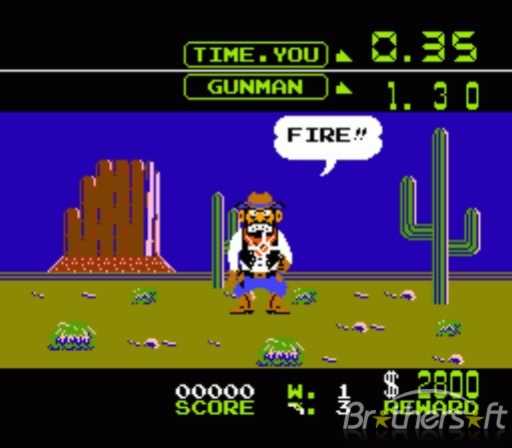
Embracing electronicsAlthough products such as the love tester seem trivial Hiroshi was beginning to make choices that would make Nintendo a very big company. Unlike most firms, Japanese or American, he made his R&D department the most important. He hired people who had flair and individuality. For example, one of his engineers wore a polyester trench coat all the year round - even indoors in mid summer. This is not what we think of as the stereotyped "Japanese" approach to business, but all of his engineers had a desire to do their best to please Hiroshi. In 1943 another eccentric, by Japanese standards at least, joined Nintendo. Masayuki Uemura worked for Sharp selling silicon cells and he visited Gunpei Yokoi to try to sell some. In conversation the two agreed that they had potential in entertainment products with the result that Nintendo hired Masayuki. Together they built a shooting game based on the use of a light gun. It was another success and the company continued growing. Then Hiroshi, Gunpei and Masayuki though of a new use for the many disused bowling alleys that were left over from the bowling boom of the early 60s - electronic skeet shooting. The electronics was a bit more difficult to perfect and on the day it was to be demonstrated to TV news crews it failed to work - but the ever resourceful Nintendo engineers made it work by hiding below the targets manually and closing switches to register hits. Having been made to work the technology evolved. "Wild Gunman", from 1974, probably qualifies as one of the first virtual reality games. A 16 mm projector displayed scenes of a homicidal manic which players had to shoot at before they were shot at.
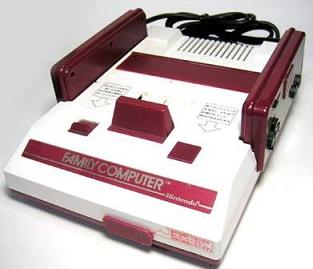
Wild Gunman In 1973 the oil crisis hit Japan and money became short. The shooting galleries became less popular. Nintendo was on the edge of collapse. Hiroshi was desperate to find some new novelty that would save the company. It took until 1975 to find the solution. Hiroshi learned about the revolution going on in the USA. Firms like Atari and Magnavox were breaking new ground in entertainment with video games. Nintendo negotiated a license to sell a version of Pong from Magnavox and teamed up with Mitsubishi to produce the electronics. In 1977 they released the Video 7 and then the video 15. Both units sold 1 million units and established Nintendo's future. The video game business was a long way from printed paper cards.They still needed a really good idea to take them into the big time. Gunpei Yokoi came up with a new idea - game watches. Take the LCD display that you find in a typical calculator of the time, some micro electronics and you have something ahead of its time. Nintendo sold millions of game watches. They were also as many clone game watches sold and this was something that Nintendo would remember. Despite the success of the game watch idea Hiroshi wanted a slice of the video arcade industry and so his team of engineers came up with games such as Hellfire, Radar scope and Sheriff. Masayuki Uemura was set to work designing a more general purpose system. In the USA cartridge games systems were available but in the main the quality of the games was low and the price of the hardware was relatively high. Hiroshi had designed that the machine should cost no more than $75 and this implied 8-bit technology. Masayuki thought hard and designed a machine that was more suited to game playing than others. There was a lot of competition at the time so the Nintendo machine had to be good. Masayuki looked at the competitors' machines and he was of the opinion that they were designed by engineers who were thinking about office, rather than games, machines. He used a standard 6502 processor but he added a special Picture Processing Unit chip to add extra graphics power. The production of the PPU chip was to be subcontracted and the firm most likely to win the contract was Ricoh - they had a slack period but the price that Nintendo wanted was ridiculously low. To make the price Ricoh wanted a minimum order of 3 million units - Hiroshi agreed even though to any reasonable observer the chances of selling 1 million would have seemed a gamble. Hiroshi also insisted that the basic design should be simple - no keyboard, no disk drive. The new games machine should be as simple as possible. It would have only 2KBytes of RAM but the cartridges would have more memory than the average games machine and it had a direct connection to the CPU that would allow expansion. The machine was launched in 1983 under the name Famicom.
Hiroshi understood the market well - at the launch he implored retailers to support the machine despite the low margins. The profits would come from the sales of the software yet to be written. The sales started to grow and then just before the peak sales period in the New Year a fault was found in the electronics. It was a small fault, one that many companies would have tried to cover up or at least postpone. Hiroshi decided to recall all of the Famicoms and replace the defective chip. As a result he lost millions in sales but the gamble paid off. The sales increased rapidly but where was the software that was promised? Several million Famicoms sold and the opposition had retreated. Nintendo stood alone in the home games computer market and they could sell all that they could make. The future of Nintendo and the whole games market depended on new software and Hiroshi had to deliver. See Super Mario - Nintendo Goes Forward for the next part of the story.
Related ArticlesSuper Mario - Nintendo Goes Forward A Brief History Of Video Games Classic Nintendo Games Are NP Hard To be informed about new articles on I Programmer, sign up for our weekly newsletter, subscribe to the RSS feed and follow us on Twitter, Facebook or Linkedin.
Comments
or email your comment to: comments@i-programmer.info

<ASIN:0340599820> <ASIN:B000E9TBRK> <ASIN:B000EGELP0> <ASIN:B001A49QTQ> <ASIN:B000I10PY2> |
||||||
| Last Updated ( Sunday, 15 January 2023 ) |