| Maurice Wilkes, father of British computing, dies |
| Tuesday, 30 November 2010 | |||
|
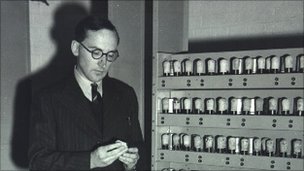
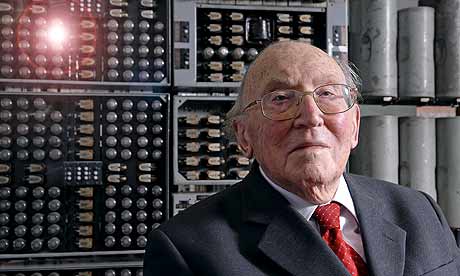
Sir Maurice Wilkes, widely regarded as the Father of British Computing, passed away today, aged 97.
Sir Maurice Wilkes, widely regarded as the Father of British Computing, passed away on 30 November 2010, aged 97. He was best known as the designer and creator of EDSAC (Electronic Delay Storage Automatic Calculator) which became the first practical stored-program computer when it ran its initial calculation on May 6, 1949 in Cambridge, England.
EDSAC, however, wasn't his only innovation. In 1951 he set to work on developing the concept of microprogramming. This was derived from the realisation that the Central Processing Unit of a computer could be controlled by a miniature, highly specialised computer program in high-speed ROM - the so called "microcode" way of building a machine. The results of his work meant that CPU development was greatly simplified. Maurice Wilkes was awarded the Turing Award in 1967, the Faraday Medal from the Institution of Electrical Engineers in London in 1981 and the Kyoto Prize for Advanced Technology in 1992. He was knighted in 2000.

|
|||
| Last Updated ( Tuesday, 30 November 2010 ) |