| New Center Probes AI Risks |
| Written by Sue Gee |
| Monday, 26 November 2012 |
|
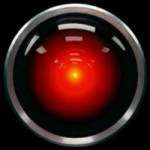
A new UK research center has been set up to investigate the potential threat presented by developments in human technology, including Artificial Intelligence. Cambridge University's Centre for the Study of Existential Risk is set to open next year and is founded by philosophy professor Huw Price, the Astronomer Royal and cosmology professor Lord Martin Rees and Skype co-founder Jann Tallinn. The concern shared by the projects founders is that: developments in human technology may soon pose new, extinction-level risks to our species as a whole. Such dangers have been suggested from progress in AI, from developments in biotechnology and artificial life, from nanotechnology, and from possible extreme effects of anthropogenic climate change. The seriousness of these risks is difficult to assess, but that in itself seems a cause for concern, given how much is at stake. Speaking to the Associated Press about the potential threat posed by advances in super intelligent technology, Cambridge philosophy professor Huw Price explained: “In the case of artificial intelligence, it seems a reasonable prediction that some time in this or the next century intelligence will escape from the constraints of biology," When that happens, "we're no longer the smartest things around" and will risk being at the mercy of "machines that are not malicious, but machines whose interests don't include us." Acknowledging that many people believe that his concern is far fetched and the stuff of science fiction, referring to HAL in the movie "2001: A Space Odyssey, Price insisted the potential risks are serious: It tends to be regarded as a flakey concern, but given that we don’t know how serious the risks are, that we don’t know the time scale, dismissing the concerns is dangerous. What we’re trying to do is to push it forward in the respectable scientific community. While Price said the exact nature of the risks is difficult to predict, he said that advanced technology could be a threat when computers start to direct resources towards their own goals, at the expense of human concerns like environmental sustainability, comparing the risk to the way humans have threatened the survival of other animals by spreading across the planet and using up natural resources that other animals depend upon. The new multidisciplinary research center based at Cambridge University is to be dedicated to the study and mitigation of risks of this kind with the goal of ensuring that the human species has a long-term future and that we are never in a position where we hear Hal, or any other robot, say, “I’m sorry, Dave. I’m afraid I can’t do that”. More InformationCenter for the Study of Existential Risk Cambridge to study technology's risk to humans http://phys.org/news/2012-11-cambridge-technology-humans.html Related ArticlesHAL 9000 - a fictional computer IBM's TrueNorth Simulates 530 Billion Neurons Google's Deep Learning - Speech Recognition A Neural Network Learns What A Face Is Poison Attacks Against Machine Learning
To be informed about new articles on I Programmer, install the I Programmer Toolbar, subscribe to the RSS feed, follow us on, Twitter, Facebook, Google+ or Linkedin, or sign up for our weekly newsletter.
Comments
or email your comment to: comments@i-programmer.info 
|
| Last Updated ( Monday, 26 November 2012 ) |