| Google’s Prediction API exits labs |
| Written by Kay Ewbank | |||
| Friday, 14 October 2011 | |||
|
There’s a new version of Google’s Prediction API, and this one is stable enough to have moved out of ‘Labs’ status.
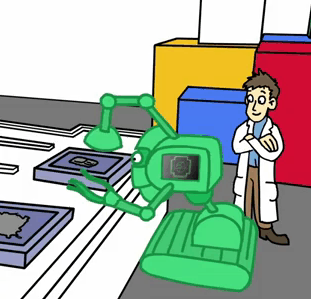
The Prediction API was launched earlier in the year, and is designed to give developers a way to use a cloud-based pattern recognition engine for applications that make use of artificial intelligence. The Prediction API team suggests that apps that might use the API could include identifying important customers, or working out which new movie to recommend to a customer. There’s a (small) gallery of hosted models to try at the Prediction API area on Google Code, where you can see models that work out the language a sentence is written in, tag a comment depending on its content, or predict whether a sentence is positive, neutral or negative. As we reported on I Programmer when the API was first announced, the way the Prediction API works is that you upload data, which can be unstructured text or numeric, to Google Storage for Developers. You then perform a supervised learning stage and finally you can use the trained model to classify new data. This is illustrated in Google's promo video:
According to the announcement on the Google Code Blog, Version 1.4 has stability and accuracy improvements and includes two new features, data anomaly analysis and support for PMML import.
Data Anomaly Analysis lets you identify problems with your data that show up in the training process, while PMML import adds support for the de facto industry standard for transmitting predictive models and model data between systems. More details of PMML Preprocessing are provided on the API's Reference documentation. You can play around for free with the API, up to 10,000 predictions per month, but after that you have to pay around fifty cents per 1000 predictions. More Information:Related articles:Google gets into AI with an API Google to start charging for Prediction API
To be informed about new articles on I Programmer, subscribe to the RSS feed, follow us on Twitter or Facebook or sign up for our weekly newsletter.

|
|||
| Last Updated ( Friday, 14 October 2011 ) |